

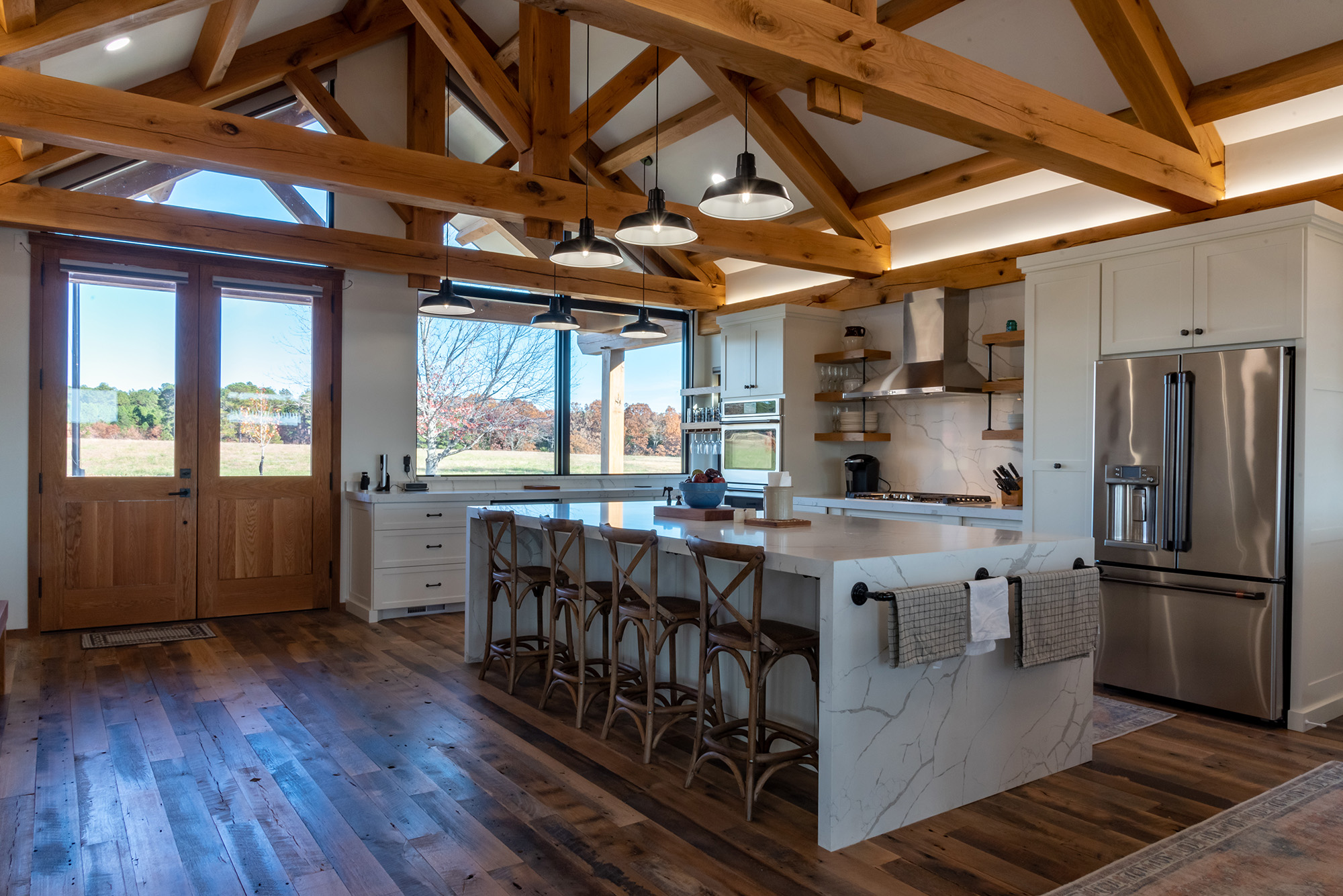
Calgary winters bring crisp mountain air, stunning blue skies, and dry conditions across the Foothills. While dry winter air keeps snow light, it presents a unique set of challenges for real wood flooring inside your home.
Low relative humidity causes natural timber to give off moisture, leading to board shrinkage, surface checking, and wide gaps between planks. You do not have to abandon the timeless warmth of natural wood to keep your floors looking pristine year-round.
Selecting stable species and modern engineered construction lets you enjoy natural hardwood floors that resist the harsh effects of Calgary's dry winters.
Indoor humidity levels in Southern Alberta frequently drop below 25% during the coldest months. When cold outside air enters your home and gets heated by your furnace, the relative humidity inside drops sharply. Wood acts like a sponge, absorbing moisture in humid weather and releasing it when the surrounding air turns dry. Understanding which hardwood species handle these humidity drops prevents costly damage and keeps your living space looking beautiful.
The Impact of Foothills Dryness on Natural Timber
Solid wood planks react continuously to the air quality inside your home. During hot, humid summer days, solid timber expands as it takes in air moisture. Once winter arrives and your heating system runs daily, solid wood shrinks across its width. This natural contraction leaves visible gaps between floorboards, creates annoying squeaks, and can cause the wood surface to split along the grain.
Rapid Chinook winds add another layer of stress to natural wood floors. A sudden warm spell in January raises indoor temperatures while keeping relative humidity extremely low. These fast environmental shifts force timber to adjust rapidly, increasing the risk of cupping or board movement. You can protect your floor by maintaining indoor humidity between 35% and 45% using a furnace humidifier, but choosing a stable wood species gives your home an extra layer of defense.
Top Hardwood Species for Stability and Durability
Not all tree species handle dry environments the same way. The cellular structure of certain hardwoods allows them to hold onto structural integrity far better than soft or open-pored woods.
White Oak for Exceptional Dimensional Stability
White oak stands out as one of the best hardwood choices for homes in Calgary and Southern Alberta. It features a dense, closed-grain cellular structure filled with natural tyloses that block moisture movement through the wood pores.
High dimensional stability: White oak expands and contracts far less than red oak or exotic hardwoods when indoor humidity fluctuates.
Resilient Janka rating: With a Janka hardness score of 1,360, white oak offers great resistance against everyday dents from busy family life and dog claws.
Versatile design appeal: The neutral grey, golden, and muted brown undertones fit seamlessly into both modern urban builds and rustic mountain homes.
Hard Maple for Clean Aesthetics and Dense Wear
Hard maple provides a sleek, contemporary look with a pale, creamy grain pattern. Ranking at 1,450 on the Janka scale, it provides excellent surface density that withstands heavy foot traffic in active households. Maple features a very tight, fine grain that resists moisture loss, but its light colour can make minor seasonal gaps more visible if your indoor air becomes excessively dry.
Hickory for Maximum Janka Hardness and Rustic Grain
Hickory reigns as the hardest domestic wood species, boasting an impressive Janka rating of 1,820. Its extreme density resists heavy impacts, dropped kitchen utensils, and wear from active pets. The high-contrast graining hides minor wear and dust effortlessly. Because hickory is so dense, solid hickory planks can show tension cracking if exposed to severe dry spells. Pairing hickory with engineered plank construction gives you maximum surface toughness without the risk of dimensional movement.
Engineered Construction Outperforms Solid Planks in Alberta
Engineered hardwood combines a genuine hardwood top veneer with a multi-layer core built from cross-directional plywood or high-density fiberboard. These core layers run perpendicular to one another, counteracting the natural urge of real wood to shift or shrink during dry spells.
Fifty percent greater stability: The cross-ply core reduces expansion and contraction by half compared to traditional solid wood planks.
Wide plank design options: You can install modern 7-inch or 8-inch wide planks without risking the severe board warping that occurs with wide solid timber.
Flexible installation levels: Engineered hardwood works across all floors of your home, including concrete subfloors in finished basements where solid wood cannot go.
Finding the Best Hardwood for Your Calgary Home
The ideal hardwood for Foothills homes combines dimensional stability with a plank construction built to handle our dry Alberta winters. White oak, hard maple, and hickory deliver outstanding beauty and durability when properly maintained in your home. Choosing engineered hardwood planks gives you the exact look, texture, and warmth of solid timber while protecting your investment against seasonal dry air.
If you want to view full-sized plank samples, compare natural grain patterns, and talk through the best underlayment options for your subfloor, drop by either of our two showroom locations in Calgary. Our flooring experts can help you compare species under realistic lighting and guide you toward the ideal choice for your home. Visit Flooring Superstores Calgary today or contact our team to schedule your free home measure.


