

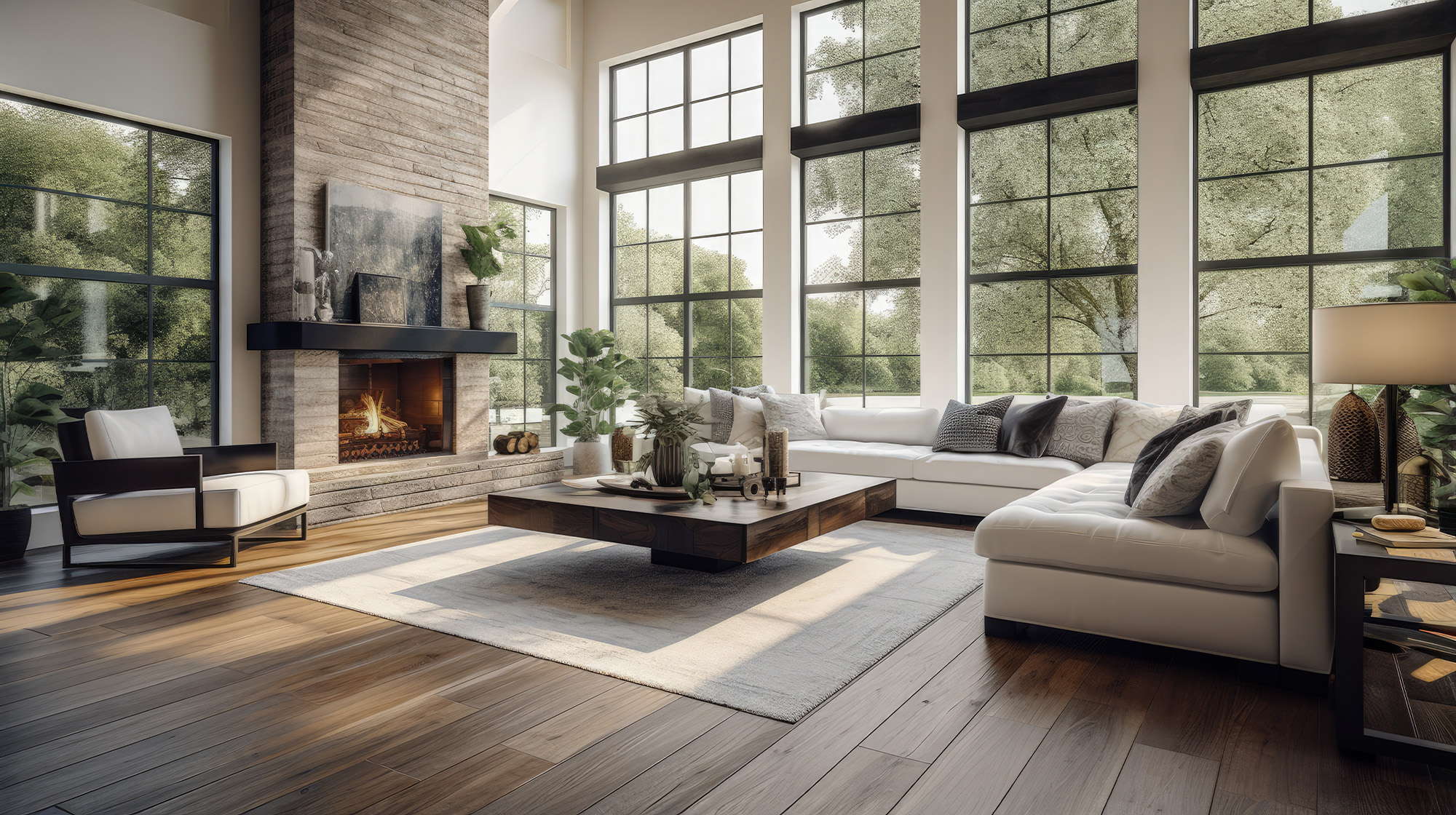
Real hardwood flooring is an unmatched investment for long-term property value, offering timeless style and exceptional durability. When you update your home with real wood, you instantly improve its market appeal and daily comfort. However, the right option for your space depends on your specific household lifestyle, the age of your property, your layout plans, and the extreme local climate shifts.
Key Takeaways: Solid vs. Engineered Hardwood in Calgary
Your home's heating system, subfloor construction, and moisture control dictate whether solid or engineered planks offer the best return on your investment:
- Climate stability: Engineered hardwood features a cross-ply core that resists cupping and gapping during dry winter months and rapid Chinook temperature shifts.
- Subfloor versatility: Engineered boards float safely over below-grade basement concrete slabs and in-floor radiant heating systems where solid planks warp from heat and subfloor moisture.
- Condo acoustic compliance: Multi-family suites call for engineered planks paired with dense acoustic underlayments to satisfy building Impact Insulation Class (IIC) bylaws.
- Lifelong renewal: Solid hardwood planks install over above-grade plywood subfloors and allow multiple complete sandings and refinishings across decades of family living.
Understanding the Physical Differences
While both options feature real wood on the surface, they are built entirely differently underneath. Knowing how each plank is made helps you understand how they perform over time.
Solid Hardwood Planks
This option is exactly what it sounds like—one solid piece of wood from top to bottom, cut straight from a tree log. Because it is a single piece of natural lumber, it behaves exactly like raw wood, expanding and contracting based on the moisture levels in the air around it.
Engineered Hardwood Planks
This option features a real hardwood top layer bonded over multiple cross-ply layers of high-density fiberboard or wood backing. The layers run in opposite directions to lock the plank in place. It is real wood, but it is engineered specifically to prevent the floor from shifting or warping.
Facing the Realities of the Calgary Climate
Calgary’s dry winters, humid summer spikes, and sudden Chinook winds create dramatic indoor humidity shifts. These fast atmospheric changes are hard on natural wood, making your choice of construction highly important.
How Solid Wood Reacts to Dry Air
Solid wood expands and contracts significantly when weather patterns change. In dry winter months, the wood shrinks, which can create visible gaps, separations, or slight squeaks between the planks. If your home does not have a reliable, whole-house humidification system running all winter, solid wood can stress at the seams.
How Engineered Wood Handles Climate Shifts
The cross-ply backing of an engineered plank creates dimensional stability. This means the core layers counteract the natural movement of the top wood layer, preventing the floor from shifting, cupping, or gapping when the indoor air gets dry. It is built to stay completely flat through every local seasonal swing.
Room Usage, Subfloors, and Your Daily Lifestyle
A flooring choice must fit the structural layout of your building and the daily habits of your household. Different areas of your home present unique installation challenges and traffic levels.
Basements and Radiant Heat
Engineered wood is the clear winner for below-grade spaces and modern heating systems. Solid wood cannot go directly over concrete subfloors or over in-floor radiant heating systems without warping and cracking from the direct heat and moisture. Engineered planks handle these setups perfectly.
Condos and Townhomes
Many local condo boards have strict acoustic rules and impact insulation class bylaws to prevent sound from traveling between units. Engineered wood allows for floating installations over specialized, thick sound-dampening underlayments, making it easy to meet your board's specific regulations.
Long-Term Lifespan
Solid wood wins on raw longevity because the planks are thick enough to be sanded down and completely refinished multiple times over many decades. If you plan to stay in your home for thirty or forty years, solid wood offers a lifetime of renewal. Engineered wood can also be refinished, but usually only once or twice, depending on the thickness of the top real wood layer.
Pets and Busy Foot Traffic
Surface protection: Both options offer hard local species like maple or oak, but engineered options often come with tough, factory-applied, scratch-resistant coatings that stand up well to claws and heavy traffic.
Accidental scratches: If a pet scratches a solid wood floor, you can eventually sand out the deep marks during a refinish, whereas deep gouges on thin engineered wood are harder to repair completely.
Make the Right Hardwood Investment for Your Home
Both solid and engineered planks deliver exceptional aesthetic appeal and long-term property value. The best investment is simply the one that matches your specific subfloor, your family's daily routine, and your home's moisture control.
Visit our showroom with your layout ideas and property details to see our local stock of solid and engineered boards side by side. You can also contact us to consult with our team about subfloor testing, underlayment needs, or booking a professional measurement.


